

History
A House With a Past — and a Vision for What Comes Next
Designed by architect Lawrence Visscher Boyd, who is known for many fine residences throughout Philadelphia and the Main Line, including a renovation of 394 Latches Lane in Lower Merion, the former home of Dr. Albert C. Barnes, which once housed his celebrated art Collection.
Long before Sugartown Road became one of the Main Line’s most desirable residential corridors, this property was connected to the former Tredyffrin Golf Club & Links. Opened in 1918, it featured a 135-acre golf course that was among the best in the region. The course itself drew notable figures of its time, including golf pro Bobby Jones, who set the course record of 66 in 1930.
The social life surrounding the Tredyffrin Country Club reflected the elegance and connections of early 20th-century Main Line society. In 1921, newspapers noted the marriage of Walter Graff to Elizabeth Sale. A few years later, Graff chose this idyllic country setting to build a home as a gift to his new bride- a fitting declaration of commitment to their life together.
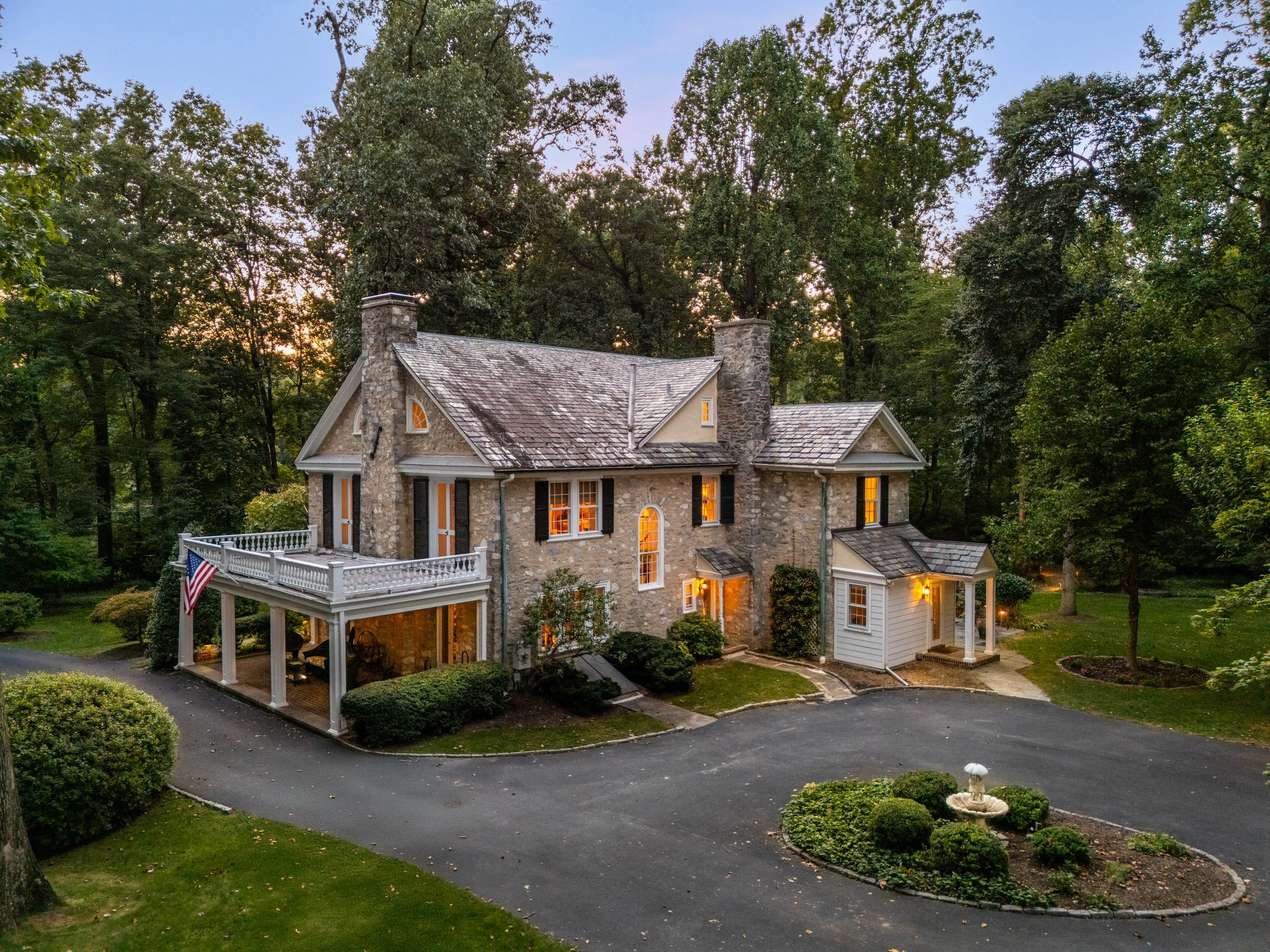
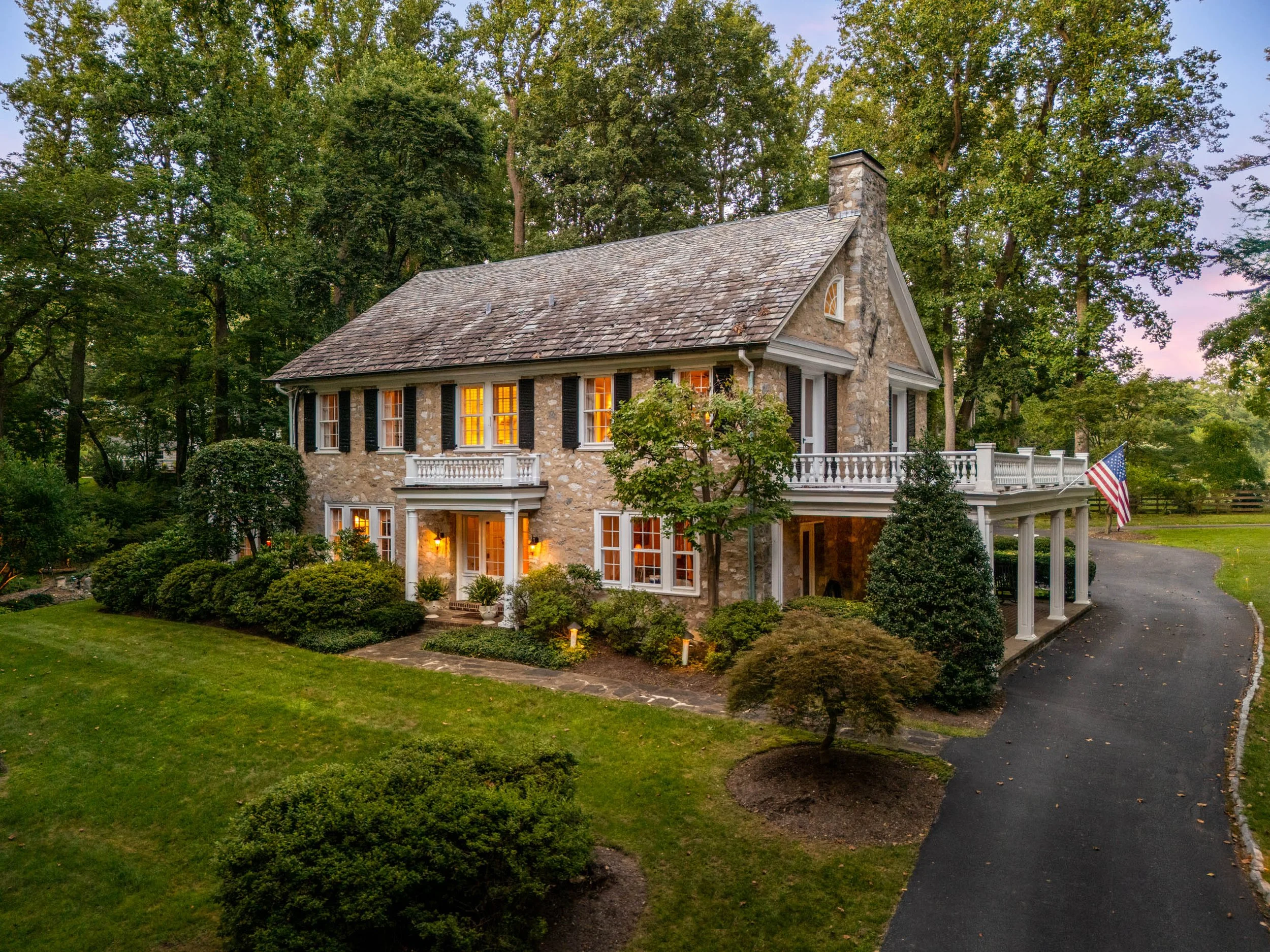
Designed by noted Philadelphia architect Lawrence Visscher Boyd, whose work includes an early renovation of Dr. Albert C. Barnes’ Lower Merion estate, the house reflects the refined country-life sensibility of its era. Thick stone walls, balanced proportions, and carefully placed windows evoke both sophistication and domestic comfort. Nearly a century later, those original intentions are still evident in every part of the property.
Inside, the home feels far more gracious than formal. A classic center entrance hall features a turned staircase and is flanked by spacious living and dining rooms. Deep-set windows and original millwork and hardware all quietly present the style and craftsmanship of the 1920s. Even secondary spaces—the sunroom, the mudroom with exposed stone, the third-floor billiards room with whimsical eyebrow windows—tell the story of a house designed to be lived in.
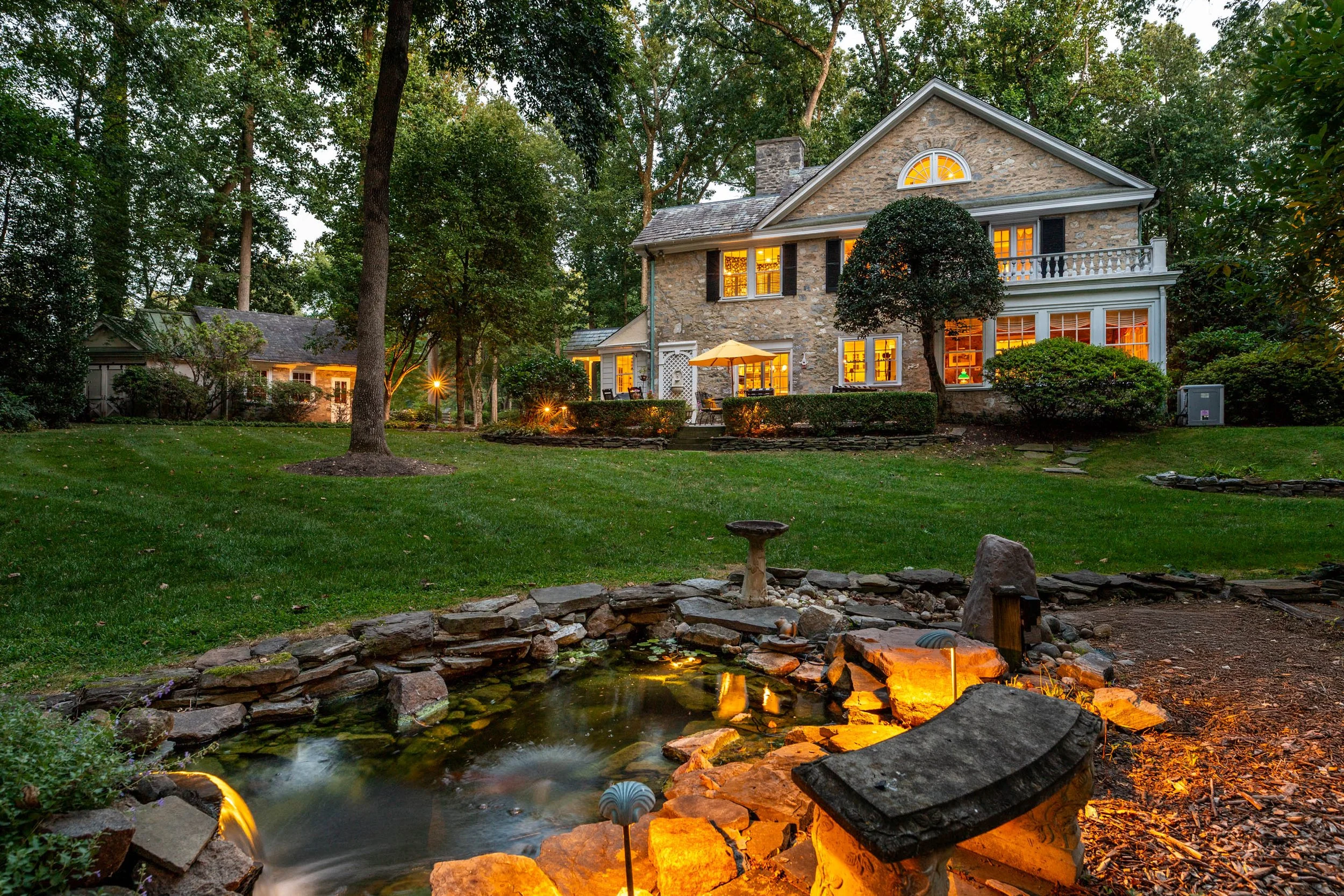
The same flavor extends to the outside, too; the three-acre setting is wooded and curated, creating a private enclave shaped by decades of thoughtful planting. Broad lawns, specimen trees, and perennial gardens create a sense of seclusion that has become increasingly rare and valued on the Main Line.
While the Tredyffrin Golf Club declined during the Great Depression and ultimately closed in the mid-1940s, subtle traces remain in neighborhood street names such as Fairway Road and Golf Club Lane. Today, the Walter Graff House remains and stands at the threshold of its next chapter.
Planned for 2026, a comprehensive renovation and large transitional addition will respectfully reimagine the home for modern living while preserving its architectural integrity. A new kitchen and great room will open toward the rear of the property, inviting daily life outward to the backyard and strengthening the home’s connection to its landscape. Upstairs, a newly designed primary suite will introduce a level of comfort and privacy expected by today’s buyers, yet carefully integrated into the original structure. This is not a reinvention that erases history. It is an evolution—one that acknowledges and preserves the house’s original character while also preparing it for life in the 21st century and beyond. For the future owner, the opportunity is rare: to steward a Main Line legacy while enjoying a home designed for contemporary life.